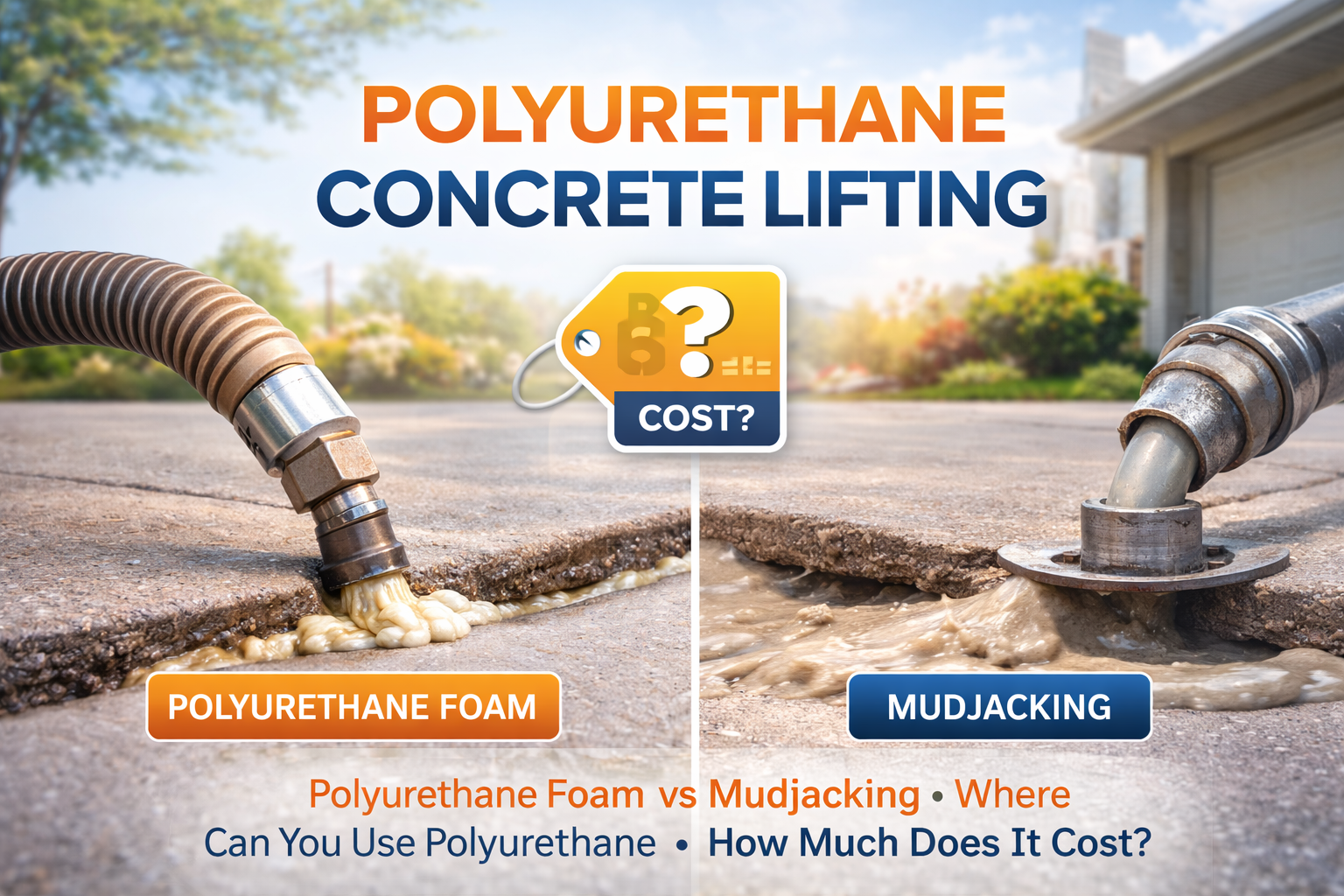
Sunken or uneven concrete is a common issue for homeowners and commercial property owners alike. Over time, soil erosion, moisture changes, and poor compaction can cause concrete slabs to sink or crack, creating safety hazards and reducing curb appeal. Fortunately, polyurethane concrete lifting offers a modern, efficient, and long-lasting solution.
In this blog, we’ll explain how polyurethane concrete lifting works, compare Polyurethane Foam vs Mudjacking for Concrete Lifting, explore where it can be used, and answer the common question: How much does polyurethane concrete lifting cost?
What Is Polyurethane Concrete Lifting?
Polyurethane concrete lifting—often called polyjacking or foam jacking—is a concrete repair method that uses high-density polyurethane foam to raise and level sunken concrete slabs. Instead of removing and replacing damaged concrete, this technique restores the slab by filling voids beneath it and lifting it back into position.
The process is minimally invasive, fast, and durable, making it a popular alternative to traditional concrete replacement and mudjacking.
How Does Polyurethane Concrete Lifting Work?
The polyurethane lifting process is precise and efficient, typically completed in just a few hours. Here’s how it works step by step:
1. Site Inspection and Assessment
A technician evaluates the affected area to determine the cause of settlement, the depth of voids beneath the concrete, and the amount of lift required.
2. Drilling Small Injection Holes
Small holes (usually less than ⅝ inch in diameter) are drilled into the sunken concrete slab. These holes are much smaller and less noticeable than those used in traditional mudjacking.
3. Injecting Polyurethane Foam
A specialized polyurethane foam is injected beneath the slab through the drilled holes. As the foam expands, it fills voids, compacts loose soil, and begins lifting the concrete.
4. Controlled Lifting and Leveling
The expansion of the foam is carefully controlled, allowing technicians to lift the slab evenly and accurately back to its original position.
5. Sealing and Cleanup
Once the slab is level, the injection holes are sealed, and the area is cleaned. The foam cures quickly, allowing the surface to be used almost immediately.
Polyurethane Foam vs Mudjacking for Concrete Lifting
One of the most common comparisons property owners make is Polyurethane Foam vs Mudjacking for Concrete Lifting. While both methods aim to lift and level concrete, there are key differences:
Mudjacking
Mudjacking uses a heavy slurry made of cement, soil, and water to lift concrete.
Pros:
- Lower upfront cost
- Effective for some basic applications
Cons:
- Adds significant weight to already unstable soil
- Larger drill holes
- Longer curing time
- Higher risk of future settling
Polyurethane Foam
Polyurethane lifting uses lightweight, expanding foam.
Pros:
- Lightweight and strong
- Smaller, less visible holes
- Fast curing—often within minutes
- Long-lasting results
- Better precision and control
Cons:
- Higher initial cost compared to mudjacking
Verdict:
While mudjacking may be suitable for minor repairs, polyurethane foam is widely considered the superior, longer-term solution—especially for driveways, foundations, and structural concrete.
Where Can You Use Polyurethane for Concrete Lifting?
One of the biggest advantages of polyurethane lifting is its versatility. It can be used in a wide range of residential, commercial, and industrial applications.
Common Uses Include:
- Driveways
- Sidewalks and walkways
- Patios and porches
- Garage floors
- Basement slabs
- Pool decks
- Warehouse floors
- Commercial loading docks
- Interior concrete floors
Where Can You Use Polyurethane for Concrete Lifting?
Almost anywhere there is sunken or uneven concrete—as long as the slab is structurally sound and not severely cracked or broken.
How Much Does Polyurethane Concrete Lifting Cost?
One of the most frequently asked questions is: How much does polyurethane concrete lifting cost?
Average Cost Range
Polyurethane concrete lifting typically costs between $8 and $25 per square foot, depending on several factors.
Factors That Affect Cost
- Size of the area being lifted
- Depth and severity of settlement
- Accessibility of the slab
- Amount of foam required
- Local labor rates
- Type of concrete surface (driveway, foundation, interior slab, etc.)
Typical Project Costs
- Small sidewalk section: $300 – $800
- Driveway repair: $1,500 – $4,000
- Garage floor or patio: $1,000 – $3,500
While polyurethane lifting may cost more upfront than mudjacking, it is often significantly cheaper than full concrete replacement and provides longer-lasting results.
Benefits of Polyurethane Concrete Lifting
Polyurethane lifting has become the preferred solution for many property owners due to its many advantages:
- Quick completion – most jobs finished in hours
- Immediate use – surfaces ready the same day
- Minimal disruption – no demolition required
- Durable and long-lasting
- Water-resistant foam that won’t erode
- Environmentally friendly compared to concrete replacement
Is Polyurethane Concrete Lifting Right for You?
If your concrete slab is sinking but still structurally intact, polyurethane lifting is often the most efficient and cost-effective repair option. It’s ideal for homeowners looking to restore safety and appearance without the expense and mess of tearing out concrete.
However, if the slab is severely cracked, broken, or deteriorated, replacement may be the better solution. A professional inspection can help determine the best approach.
Conclusion
Understanding how polyurethane concrete lifting works helps property owners make informed decisions about repairing sunken concrete. Compared to traditional methods, Polyurethane Foam vs Mudjacking for Concrete Lifting clearly highlights the advantages of modern foam technology—precision, durability, and speed.
From driveways and sidewalks to foundations and commercial floors, knowing where you can use polyurethane for concrete lifting and how much polyurethane concrete lifting costs makes it easier to plan repairs and protect your investment.
If you’re looking for a long-lasting solution to uneven concrete, polyurethane concrete lifting is a smart, modern choice.